
02 — About
Lazar Stanojković I About
A space where you can be truly yourself.

My name is Lazar Stanojković. I am an interactive supportive psychoanalyst, and for more than half a decade I have been working with people who have reached the point where their own life no longer feels like something they choose, but like something that happens to them. I work in Belgrade, in person and online, in English and Serbian, with individuals and with couples.
Why Conatus
The practice is called Conatus. The word is Latin and old; the philosopher Baruch Spinoza brought it into philosophy to name something quite simple: the effort by which every being persists in its own existence. It is not the survival instinct, but something quieter and more persistent than that, the part of us which, even when everything goes wrong, still wants to be, and to be its own. The people who come to me have usually not lost that effort. They have lost its direction. They spend it in the wrong places: on relationships that give nothing back, on work that does not feed them, on a fight with themselves that never ends. The work we do together is not to wake that effort, because it is not asleep, but to return it to where it belongs.
“Each thing, as far as it lies in itself, strives to persevere in its being.”
Baruh Spinoza, Ethics, III part, paragraph 6
What people come with
They come with all sorts of things, and rarely with a ready name for them. They come with anxiety that will not let up and with panic attacks that arrive out of nowhere; with an emptiness their circumstances cannot explain, because the circumstances, seen from outside, are perfectly fine; with relationships that keep ending the same way; with decisions postponed for years; with the feeling of living someone else’s life, well rehearsed and needed by no one. Couples come too, usually once they have exhausted the conversation between themselves and need a third person who will not take sides. You do not need to know which of these is yours. It is enough that there is a question that will not leave you alone.
What interests me
Most people who get in touch already know, roughly, what is wrong. They know they choose the same people, postpone the same decisions, get stuck in the same place and come out of it the same way, tired and with the feeling of having been here before. Knowledge, then, is not what they lack. What they lack is an answer to the question of why that knowledge does not help. Why does a person who understands everything still repeat? And what has to happen for the repetition to stop? Psychoanalysis has been asking exactly that question since Freud, and that is why I chose it. Not because it is old, but because it is the one approach that does not walk around that question.
How I work
The therapeutics I practise rests on a psychoanalytic framework and builds on it with philosophy. That is not decoration. Psychoanalysis knows how to listen to what a person says when they think they are silent; philosophy knows how to ask what a good life actually is, and who gets to decide. Joined together, they bring into one approach several of the social sciences on which, if you look closely, practically all the helping professions rest: an understanding of the unconscious, the logic by which a person convinces himself, the knowledge of how people live with one another. The name of this approach is interactive psychoanalysis. It is being developed at the Institute for the Philosophy and Interdisciplinary Studies, and its foundations were published by the Serbian Academy of Sciences and Arts.
Behind the technical name is a simple idea. Many people expect understanding to bring change by itself: once you grasp why you do something, you will stop doing it. I wish it were so. Experience, mine and that of anyone who has ever tried, shows that this is rarely enough. A person can understand a great deal about himself and his life can stay exactly the same. Interactive psychoanalysis therefore shifts the emphasis: what we understand in a session is not the end of the work but its beginning. The real test is outside. Has something actually changed in how you live, how you choose, how you work, how you love? If it has, we have done well. If it has not, we go back and keep looking. Change is measured not in the session but in life, and that is the only measure I accept.
“Interactive” means something else too, and I think it is what people notice first: I am not a silent observer taking notes. We talk. I ask, I check whether I have understood you, sometimes we disagree, and that is fine, because the solution is not something I bring, and not something you arrive at alone. It takes shape between us, in the conversation, and it has to fit your life, your circumstances and your possibilities, not some general picture of what a healthy and successful person looks like. There are enough such pictures. You do not need another one.
What to expect
A conversation, first of all, and a serious one. I will not file you under a diagnosis and I will not hand out advice of the “try to think positively” kind. Expect questions you will not always have a ready answer to, and expect me to pay attention to what repeats in the way you speak, which you no longer hear because you hear it too often. Expect the work not to stop when the session does: between meetings you live, and what you live you bring back, so that together we can check whether what we have arrived at holds up outside this room. Do not expect speed. What has settled over years does not come undone in a month, and anyone who promises otherwise is promising something that is not in their power. But do not expect endlessness either. The aim of the work is that one day you will no longer need me, and I do not postpone that day.
Training and work beyond the consulting room
I earned the title of interactive supportive psychoanalyst at the Institute for Philosophy and Interdisciplinary Studies (CERIP) in Novi Sad, where I am also an expert associate on the course Introduction to Interactive Psychoanalysis. Alongside this, I am in Lacanian psychoanalytic training with the Lacan Balkan association, because I believe a good practitioner never stops learning, and because psychoanalysis speaks more than one language. I lecture and write on psychoanalysis and philosophy. In 2022 and 2023 I worked as a consultant on “Reduce Risk, Increase Safety”, a UNDP project in Serbia for the prevention of gender-based violence and femicide. What happens behind closed doors is rarely an entirely private matter, and that work confirmed it for me once more.
Get to know the way we work
About interactive psychoanalysisAbout psychoanalysis
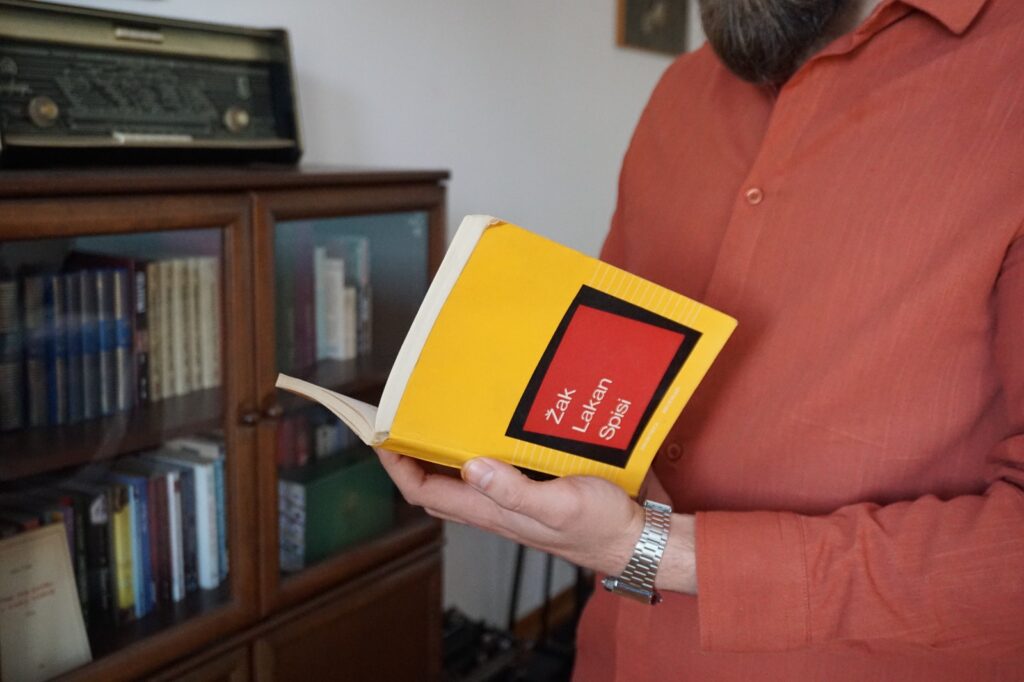
The word “psychoanalysis” usually brings one of two pictures to mind: either a bearded Viennese and a couch, or something old, slow, and reserved for people with a great deal of time and money. Both pictures have something to do with the truth, and neither is the truth. This text tries to explain what psychoanalysis actually is, why it still exists after more than a hundred years, and what you can expect from it, and what you cannot. If you want to know how I apply it in practice, that is described on the page about interactive psychoanalysis; here the subject is the foundation on which that stands.
One simple idea
Psychoanalysis was founded in Vienna at the end of the nineteenth century by Sigmund Freud, a physician who worked with people whose complaints the medicine of his time could not explain: paralysis without injury, a cough without illness, fear without danger. What he discovered was simple and, for its time, scandalous. These people were not pretending and were not mad. Their bodies and their fears were saying something they themselves were not allowed to know. And when they were permitted to speak freely, without aim, about whatever came to mind, a thread would begin to come loose from that speech, as from a tangled ball, and the complaint, once enough of the thread had been drawn out, would ease.
A whole discipline grew out of that discovery, but the idea at its core has remained the same. A person does not know everything about himself. Part of what moves him, frightens him, and keeps bringing him back to the same place was formed long ago and works without his knowledge. This is what psychoanalysis calls the unconscious. And the unconscious is not a cellar full of monsters; it is, put most simply, everything you know about yourself without knowing that you know it. You know, for instance, that you always choose people who will leave you. You do not know why. That “why” is unconscious, and it is uncovered not by thinking but by speaking.
Why speech
People sometimes ask me how mere conversation can change anything. It is a good question, and the answer is that conversation is not “mere”. Everything you think about yourself, you think in words. Everything that has happened to you, you remember as a story. And all the rules you live by without having chosen them are written in language, even when you have never said them aloud. That is why they can be heard in speech: in the word you use without meaning to, in the subject you steer around, in the fact that you tell the same story for the third time without noticing it is the same. A psychoanalyst listens for exactly that. Not only what happened to you, but how you tell it, and where your story always tangles at the same spot.
That is the difference between talking to a friend and talking in this room. A friend listens in order to help you, and so interrupts, consoles, advises. I listen so that you can hear yourself, and so I do not interrupt when you would like me to, and I ask where you would rather pass over. It is not always pleasant. It is useful.
What a symptom is
Medicine sees a symptom as a malfunction to be removed. Psychoanalysis sees it differently: as a solution. A bad solution, an expensive one, but a solution to something that at one point was unsolvable. The panic attack that stops you from going to the meeting you were afraid to refuse; the exhaustion that frees you from the obligation you did not know how to decline; the jealousy that gives you a reason to leave before you are left. A symptom always does something for you, even when it is destroying you. That is why it is not removed by force; removed by force, it comes back in another place and under another name. It is removed by understanding what it does, and finding it a replacement that costs less.
The same goes for repetition. People most often come because something keeps repeating: the same type of partner, the same conflict at every job, the same decision postponed again and again. Repetition is not bad luck. It is the most reliable sign that there is a rule producing it, and that rule can be found.
What psychoanalysis is not
It is not counselling. You do not receive instructions on what to do, because such instructions would be mine, not yours, and would not hold up when I am not there. Nor is it a search for someone to blame in your childhood. Childhood interests us because that is when the rules were written, not so that we can accuse anyone; parents, for the most part, did the best they could with rules they had inherited themselves. Nor is it endless digging into the past for its own sake: what was interests us exactly as much as it is still at work today.
And it is not only for people in crisis. Many of the people who come to me function perfectly well, from the outside. They have a job, relationships, plans. They come because all of that is in place and the feeling that something is not right will not go away, and because they suspect, rightly, that this feeling will not be solved by one more promotion.
What has changed in a hundred years
Over the twentieth century, many schools of psychoterapy grew out of psychoanalysis, inculding those that later turned against it. After Freud, psychoanalysis developed in many directions, and today there are several schools that disagree on some things. That is not a weakness but a sign that the discipline is alive. Much has changed: the couch is no longer compulsory, the analyst is no longer obliged to be silent, and the work does not have to last for decades. What has not changed is the basic conviction: that a person who speaks freely says more than he thinks he is saying, and that in that surplus lies what he needs.
One of these contemporary directions was developed here, in Novi Sad, and is called interactive psychoanalysis. It keeps everything I have described here and adds two things: conversation instead of silence, and verification instead of taking it on trust. In it, change is measured not by your having understood it, but by what happens in your life, outside the room, without me. I write about this in detail on a separate page.
What to hope for
Do not hope to become someone else. Psychoanalysis does not offer that, and it should not. Hope that you will see clearly, for the first time, the rule you have been living by, that you will be able to call it by its real name, and that the next time you find yourself in the familiar place you will have the possibility of doing something else. That does not sound like much. People who have experienced it know how much it is.
If you want to know what the work looks like from day to day, read the Working with Clients page. If you are ready for a first conversation, it is free and described on the How to Start page.
A conversation that
moves with you.
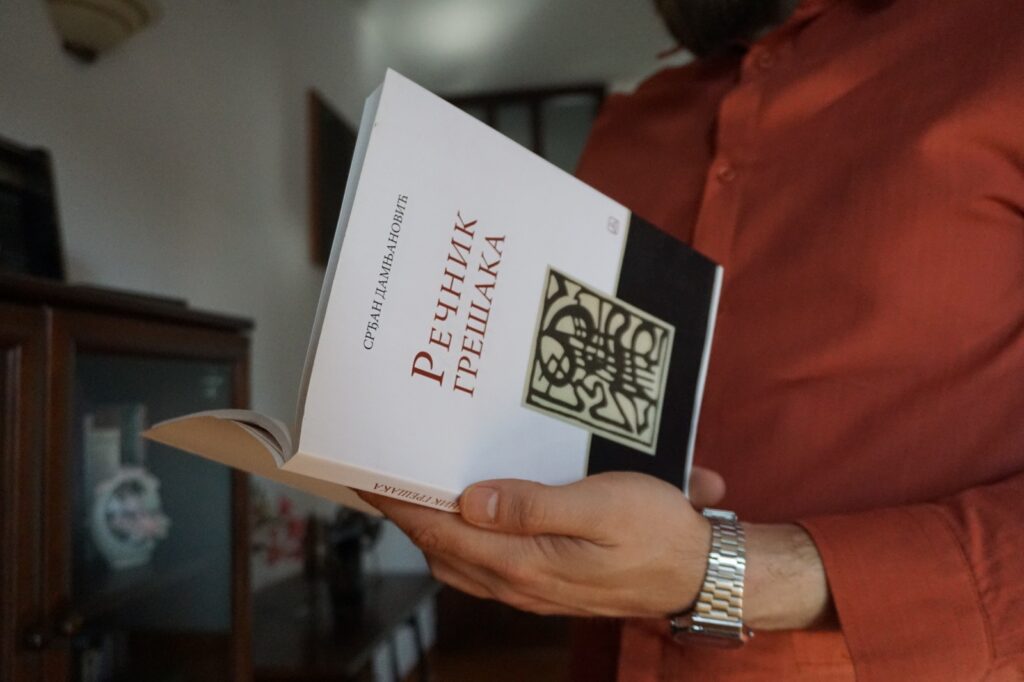
Interactive psychoanalysis is a way of working that grew out of psychoanalysis and added to it the thing that, in my experience, it lacked most: verification. It is being developed in Novi Sad, at the Institute for Philosophy and Interdisciplinary Studies, and its foundations were published by the Serbian Academy of Sciences and Arts. The name carries two words, and both are there for a reason. “Psychoanalysis” says what we listen for: the part of a person that keeps repeating, and which that person never chose. “Interactive” says how we work: in conversation, in both directions, and with one measure that does not sit in the room but in your life.
This text is long, because it seems to me that people considering this kind of work deserve to know what they are getting into, rather than simply being promised they will feel better. If you have no time for all of it, the essence fits into three sentences. Each of us lives by rules we did not choose. Those rules can be found, tested and changed. And change is proven not by our having understood it, but by its holding up outside, without me.
What is inherited from psychoanalysis
Since Freud, psychoanalysis has developed a single great insight in many directions: a person does not know why he does what he does. Not because he is stupid or careless, but because a good part of what moves him was formed long ago, before he could choose, and has been running on its own ever since, like a habit that no longer knows it is a habit. This is what psychoanalysis calls the unconscious, and it is not a mystical word. The unconscious is, put most simply, the set of rules you live by and have never said out loud. You see them only by their consequences: by the fact that the same thing keeps happening, that in the same situations you always feel the same, that the same kind of person keeps seeming irresistible and keeps letting you down.
Psychoanalysis also learned that these rules are heard best in speech. Not in what a person means to say, but in what slips out: the word used unintentionally, the subject avoided, the story told for the third time without any notice that it is the same story. That is why in this work we talk, and why I listen differently from the way a friend listens. A friend listens to what happened to you. I also listen to how you tell it.
And third, psychoanalysis knows that what happens to a person with others will sooner or later begin to happen with me. If you are used to being let down, you will begin to expect me to let you down. If you are used to pleasing, you will begin to please me. That is not an obstacle to the work; it is the most valuable material we have, because the rule is then not being recounted but happening, live, in front of us. All of this interactive psychoanalysis keeps.
What has been added: interaction
The word “interactive” is there because this work differs in two ways from the picture people have of psychoanalysis.
First, I am not a silent observer. In the classical picture the analyst is silent, the person speaks, and meaning is born out of that silence. In this work we talk. I ask, I check whether I have understood you, I tell you what I hear and leave it to you to accept or reject it. When something catches between us, when I anger you, disappoint you, or seem not to understand you, we do not let it smoulder; we speak about it at once. I know from experience that this kind of openness does not spoil the relationship but is what makes it. Trust between us is not something we have at the start because we are polite; it is something we earn by going through whatever has caught between us.
Second, the interaction is logical and empathic at the same time, and both words matter. Empathic means that I try to understand from the inside how you think and feel, rather than measuring you from the outside. Logical means that I do not stop at understanding. The rule you live by has its own logic, and that logic can be tested. If there is an error in it, it is usually right at the beginning, in the premise, in what you once took as certain and then built everything else on. A person who learned as a child that love has to be earned will build a whole life on that: relationships in which he is forever proving himself, a job at which he is never enough, and a tiredness he does not understand. None of those consequences can be repaired until the premise is seen. And the premise does not show itself; someone has to ask.
That is why this work aims not only at what you think about, but at how you think. Every person thinks in his own specific way, and symptoms are not random; they follow the logic of that way of thinking as consistently as effect follows cause. When that way of thinking changes, the symptoms have nothing left to live on.
How change comes about
Here comes the most important difference, and I ask you to read it carefully, because it is the reason I work exactly this way.
Most people, and a good part of the profession, believe that change comes from insight: once you understand why you do something, you will stop doing it. I wish it were so. But anyone who has ever understood something deeply about himself and then carried on as before knows that insight and change are not the same thing. Insight is necessary. It is not sufficient.
Insight is necessary. It is not sufficient.
Interactive psychoanalysis therefore asks not only whether you have understood, but whether something has changed, and it has a fairly precise idea of how change is made. Not mystically, but almost like a craft, in a few steps that can be named.
First, we agree on a task. Not “to feel better”, because that is not a task but a wish. A task is something real from your life, clear enough that one knows when it is done: the conversation you keep postponing, the decision you are not making, the relationship in which you lose yourself. Part of the agreement is the measure: how we will know it has worked.
Second, there is an order. Not everything is done at once, because that way nothing gets done. Some things have to come before others, and part of my job is to know which.
Third, the rule is corrected by running into reality. This is crucial. A rule does not change in the head, by thinking; it changes when you apply it to a real task and see where it jams. Reality resists, and that resistance is the teacher. Once, twice, five times, until the rule is honed enough to work.
Fourth, what has started working gets a name. Not just any name, but an exact one. A rule that is only a feeling cannot be carried anywhere; a rule that has been spoken and understood can be carried out of the room. This step, turning experience into a clear thought, sounds abstract, but in practice it is the moment when a person can say for the first time what he is actually doing differently.
And fifth, the test. The new rule has to appear on its own, in a situation we did not rehearse, without me and without this room. Only when that happens do we know the change is real. Not because you felt it to be so, and not because I judged it to be so, but because it happened in a place where it could not have been staged.
That is what I mean when I say change is measured not in the room but in life. Insight and feeling are welcome, but they are not proof. Proof is what holds up.
An example
Take a man who cannot say no. At work he takes on other people’s tasks, at home he agrees to plans he does not want, among friends he is always the one who adapts. He is tired, and angry, but he does not show the anger, because that too would be a kind of “no”. When he comes, he usually says he has a problem with boundaries. That is true, but it is not what we will work on, because “boundaries” is not a task but a heading.
First we look for the premise. Underneath all that agreeing there usually lies one sentence, never spoken, which goes roughly: if I refuse, I will lose them. That sentence was true once, long ago, in some relationship where a child had to be obedient in order to be loved. Today it is not true, but he does not know that, because he has never tested it: since he has never refused, he has never seen that people do not leave him afterwards.
Then we agree on a task, one and small: one refusal, at work, this week, to someone who cannot fire him. Not “setting boundaries”, but one sentence to one person. Then he does it, and reality answers him. Perhaps the colleague shrugs; perhaps he is briefly annoyed and it passes; perhaps it turns out nobody even noticed. Whatever happens, for the first time he has seen what actually happens when he says no, instead of what he has assumed all his life would happen. The rule has run into reality, and reality has corrected it.
After that we name the corrected rule, in his words, not mine. Something like: I can refuse and still stay in the relationship. It sounds simple, but it is the first time he can say that sentence as something he knows, rather than something he has been told.
And the test comes on its own. One day, a month later, in the middle of a conversation with his sister, he says he cannot come to lunch, without drama, without preparation, without a thought of me. And only when he tells me this, in passing, as if it were nothing, do I know that we have finished that task. Not because he feels better, but because the rule appeared where we had not rehearsed it.
What this means for the relationship between us
Because change is tested outside, the relationship between us takes on a different role than in classical work. It is not the proof that something has changed; it is the tool with which change is made. What repeats between us we use to see the rule more precisely and to define the task more precisely. Once that has been seen and used, we move on. We do not stay in the relationship for its own sake. That is why this work does not last forever; it has a direction and it has an end, and the end comes when you no longer need me.
How it differs from other approaches
From classical psychoanalysis, as I have said, it differs in that we talk, and in that the measure lies outside. From short, structured approaches that work with techniques and protocols it differs in that it does not aim at the symptom but at the rule that produces the symptom; a symptom that is removed while the rule remains comes back in another place and under another name. From counselling it differs in that I do not give advice. Not because I have none, but because advice, even good advice, remains mine; a rule you have honed and tested yourself remains yours, and only that kind holds up when I am not there.
Why philosophy
This work rests on a psychoanalytic framework and builds on it with philosophy, and that is not decoration but necessity. Psychoanalysis knows how to listen; philosophy knows how to ask whether something is true, how to tell a rule from an exception, and how to pose the question that no technique poses: what is a good life, actually, and who gets to decide. In this work you decide, but not alone and not blindly, with someone who knows how to check whether your rule holds water. Philosophy also brought the idea that stands behind everything I have written here: that a person changes as a being who thinks, not only as a being who feels. Much is felt; much is thought, often wrongly. When one thinks more accurately, one feels differently.
Where it comes from
Interactive psychoanalysis is a Serbian approach. It is being developed at the Institute for Philosophy and Interdisciplinary Studies in Belgrade, where I earned my title and where I am an expert associate, and its foundations were published by the Serbian Academy of Sciences and Arts. Around it there is also a professional journal, Agrafa, in which it is written about and debated, criticism included. I mention this because I think it matters: an approach that did not allow itself to be tested would have no right to ask you to test your own rules.
Who it is for
For people who are tired of the same thing repeating and who are ready to speak, to work between sessions too, and to wait for change to prove itself rather than declare it. It is not for those who want quick relief without change; there are other approaches for that, and I will tell you so openly. What the work looks like from day to day is described on the Working with Clients page; how to begin, on the How to Start page.